Solitaire: Card Games
- 4.7
- Rating
- 5.00M
- Installs
- Free
- Price
 Analysis by App-foxy
I spent time with Solitaire: Card Games as a quiet, familiar card game rather than a feature-heavy mobile experience. It is a free solitaire title from Happibits Game, made for Android users who want an easy way to fill a short break, settle down before bed, or enjoy a few hands without learning a complicated ruleset. The basic appeal is immediate: you open it, recognize the card layout, and can begin playing with very little preparation.
That simplicity is its strongest quality, but it also defines its limits. This is not the game I would choose when I want a deep campaign, a large social community, or a highly competitive card system. I would recommend it more readily to someone who likes traditional solitaire and wants a convenient phone version. The important question is whether the relaxed format suits you, especially when the game includes optional purchases ranging from $0.99 to $139.99 per item.
How the solitaire experience feels in everyday use
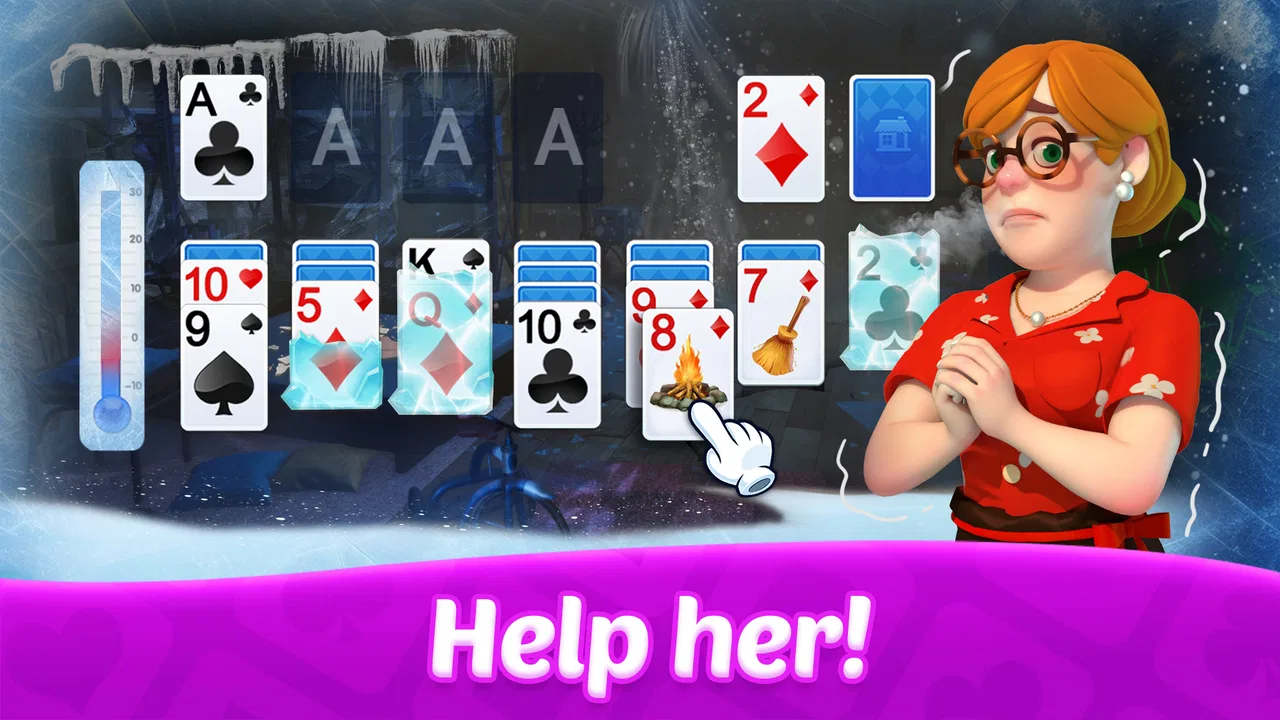
The game belongs squarely in the card category, and its store summary promises a way to relax and unwind with solitaire. In practice, that positioning makes sense. Solitaire works well on a phone because each move is short, the rules are familiar, and you can stop at almost any moment. I found the format especially suitable for those small gaps in the day when a full game would be too demanding but scrolling through social media feels unproductive.
You May Also Like

 Blood Strike: 2.5 Anniversary
Blood Strike’s Loadouts Turn Every Drop Into a Tactical Gamble
A close look at Blood Strike’s custom loadouts: how fast access to signature weapons reshapes its battle royale rhythm, rewards preparation, and narrows the gap between fights.

 Pandora - Music & Podcasts
Pandora’s Music Is Easy to Start, but Harder to Recover
Pandora’s strength is its low-effort path from a seed to a station. Its weak spot is how much confidence it asks you to place in connection, setup, and quiet recovery.

 8 Ball Pool
 Is Built on Rivalries, Rematches, and Routine
A close look at the rivalries, rematches, shared routines, and unanswered safety questions that turn a quick pool match into a persistent mobile community.

 Samsung Music
’s Quiet Strength Is Playing What You Already Own
Its reach comes less from spectacle than from dependable access to a personal library. That simplicity is both the app’s strongest retention engine and its ceiling.

 AccuWeather: Weather Radar
AccuWeather Review: A Quick, Clear Forecast for Everyday Decisions
For everyday plans, the best forecast is the one you can understand quickly. AccuWeather makes rain timing, radar, and local conditions easy to act on, with a few trade-offs.

 Hill Climb Racing
Why Hill Climb Racing Still Turns Crashes Into One More Run
A tiny car, a bumpy hill and one more upgrade: Hill Climb Racing keeps resurfacing because its simple chaos makes every near-miss feel personal.
More From Our News Desk



A realistic example is a commute or a waiting room. I can open a hand, make a few moves, and put the phone away without needing to remember a story, a team, or a long-term objective. If I return later, the mental task is still easy to understand: examine the available cards, uncover hidden options, and decide which move keeps the layout open. That makes the game more calming than many mobile titles that constantly ask for attention.
The free entry point matters here. I can try the core experience without paying first, which is exactly what I expect from a casual solitaire game. The age rating is Everyone, so the presentation is aimed at a broad audience rather than a niche adult player base. It is also available for devices running Android 7.0 or later, giving it a practical reach across older and newer Android phones.
One useful habit is to treat each hand as a short decision exercise rather than a test of speed. I get better results when I pause before moving an exposed card. A move that looks helpful because it reveals a card can sometimes reduce the number of useful spaces available later. The game’s value is not only in tapping cards; it is in making that small chain of choices while keeping the experience low pressure.
The small decisions that make it more than automatic tapping
For new players, the most helpful approach is to prioritize moves that reveal face-down cards, while still checking whether a different move creates more room for future sequences. Empty columns are valuable because they give you flexibility, but filling one too quickly with the wrong king can make the layout less adaptable. I recommend looking at the whole tableau before committing to a move, particularly when several cards are currently available.
Another practical tip is to avoid moving cards simply because the move is legal. In solitaire, legal does not always mean useful. If two moves are possible, I usually prefer the one that preserves more choices in the next turn. This is a small distinction, but it changes the game from repetitive tapping into a compact planning puzzle.
The short-session design also makes it useful as a mental reset. I would not describe every hand as exciting, and that is partly the point. The predictable structure gives me something to focus on without the emotional spikes found in battle games or timed challenges. Someone who wants constant novelty may find it plain, but a player looking for a steady rhythm may appreciate that restraint.
Where progress can become pressure
Solitaire naturally creates a sense of progress because cards move from the tableau toward their final piles. Even without a story or character system, completing a hand gives a clear feeling of closure. That can encourage one more attempt after a loss, especially when the previous hand seemed close to working out.
For me, the healthiest way to use it is to decide in advance how long I want to play. A quick hand can easily become several attempts because the rules are so accessible. This is not a criticism unique to this title, but it is relevant when a relaxing game starts to feel like a task that must be completed. If you are prone to replaying a level until you win, solitaire can quietly produce the same pattern.
The presence of in-app purchases makes that boundary worth considering. Individual purchases are listed from $0.99 up to $139.99. That range does not tell me what every purchase contains, so I would not assume that spending is necessary, beneficial, or connected to a particular advantage. My advice is simple: begin with the free experience, decide whether the basic play is satisfying, and avoid treating a purchase as a solution to an unlucky or difficult hand.
This is also where I would be cautious with younger players. The Everyone rating describes the content audience, not a guarantee that spending will never become a concern. If the phone is shared with a child, I would use the device’s purchase controls and make sure the player understands that optional items can cost real money. That is a practical safeguard, not a judgment about the game’s design.
Fairness, randomness, and the competitive question
Solitaire is different from a multiplayer card game because the main opponent is the layout and, depending on the deal, your own decision-making. I do not approach this title expecting an esports-style test of skill. Its appeal is personal: can I read the board well, preserve options, and finish the hand?
That makes competitive fairness a limited issue here. There is no reason for me to compare it with a head-to-head card battler where purchases might affect another player’s chances. Instead, I judge fairness by whether the game lets me make meaningful decisions and whether I can enjoy a hand without feeling pushed to spend. Since the purchase range is visible, I would keep spending separate from the satisfaction of solving the layout.
I also avoid treating a lost hand as proof that the game is unfair. Solitaire deals can create difficult positions, and a mistake early in the layout may only become obvious much later. The better test is whether I can learn from the loss. When I review the sequence, I often see that I used a free space too soon, moved a stack before exposing a useful card, or chose a convenient move instead of the move that preserved flexibility.
Players seeking a serious competitive ladder should probably look elsewhere. A traditional solitaire app is better suited to private improvement than public ranking. If your priority is comparing skill directly with friends, a multiplayer card game with transparent rules and a clearly defined matchmaking system would be a stronger fit. I would choose this one for calm concentration, not for proving superiority over another person.
Who will enjoy it, and who should skip it
I think it is a good match for people who already understand standard solitaire and want a straightforward mobile version. It also works for beginners because the basic objective is familiar and the turn-by-turn structure is easy to grasp. Older Android users may appreciate that the minimum requirement is Android 7.0, while casual players will like being able to start without an upfront price.
It is particularly suitable for three kinds of use. First, it can fill a short waiting period without demanding a long commitment. Second, it can provide a quiet wind-down activity when you want something more focused than passive video. Third, it can serve as a simple daily puzzle routine for someone who enjoys repeating a known format and gradually making better decisions.
I would skip it if you need a rich progression system, a narrative, frequent content changes, or direct competition. I would also look for another option if you dislike traditional solitaire’s dependence on repeated layouts and small tactical choices. The game does not become a strategy role-playing experience just because it is on a phone. Its appeal depends on whether you find the card movement itself satisfying.
Compared with playing solitaire with physical cards, the phone version is more convenient and less messy. I do not need a table, a deck, or enough space to lay everything out. The trade-off is that the physical version feels more tangible and gives me complete control over the deck and layout. Compared with a browser version, a dedicated app is easier to reach during a break, although the browser can be preferable if I do not want another installed game.
Compared with elaborate card apps, this title’s narrower purpose is an advantage when I want to relax. A larger card collection may offer more variety, but it can also introduce menus, currencies, challenges, and notifications that distract from the hand itself. Here, the appeal is the direct route from opening the game to making a move. That focus will feel refreshing to some players and repetitive to others.
What I would check before spending
The developer is Happibits Game, and the title has reached more than five million installs. It holds a 4.7 average from around 301 thousand ratings, with roughly 3.6 thousand written reviews. Those figures suggest that many players find the experience appealing, but popularity does not replace personal testing. Solitaire is highly dependent on taste: a player who loves quiet card layouts may rate it highly, while someone looking for variety may lose interest quickly.
The current version is 1.0.66, and the game was released on June 30, 2022. Those details are useful when checking compatibility and deciding whether the app fits your phone, but they do not tell me how much I will enjoy a particular session. I would install it, play several free hands, and pay attention to whether the controls feel comfortable and whether the pace suits my habits before considering any optional purchase.
I would also make a clear distinction between enjoyment and completion pressure. If I lose, I can start another hand because I want to solve a new layout, not because I feel that I must recover a previous result. If an optional item appears tempting after a frustrating loss, that is exactly when I would stop and reassess. Paying should be a deliberate choice for something I already value, never an automatic response to disappointment.
The purchase range is the main reason I would recommend a little caution around the free label. Free installation is useful, but it does not mean every part of the experience is cost-free. Since the listed item prices extend from a small amount to a much larger one, I would review each purchase screen carefully and keep device-level protections active. That approach lets me enjoy the basic game without turning a casual pastime into an unplanned expense.
My final view after using it as a daily card break
Solitaire: Card Games succeeds because it understands the appeal of a familiar card routine. I can pick it up quickly, play for a few minutes, and leave without losing track of a complicated system. The free starting point, Everyone rating, broad Android compatibility, and strong player response make it an easy title to try for anyone who already enjoys solitaire.
My recommendation is more measured when it comes to long-term depth. I would not install it expecting a competitive community, a substantial campaign, or endless variety. I would install it for the small decisions: choosing when to expose a hidden card, protecting an empty column, and resisting moves that are merely legal rather than useful. Those details give the familiar format enough thoughtfulness to remain engaging during short sessions.
For spending, I would stay with the free experience until I knew exactly what I wanted and why. The listed in-app purchase range means the game deserves the same basic care as any other free-to-install title. If you want a calm, accessible card game and are comfortable setting your own limits, this is an easy recommendation. If you need transparent competitive balance, a richer progression loop, or more variety than classic solitaire can offer, another card game will serve you better.
My trust verdict is therefore positive but practical: try it for the play itself, not for promises about progress or purchases. When I use it as a brief mental reset rather than a challenge I must conquer, it delivers the relaxing card experience it aims for. That focused purpose is enough to make it worthwhile, provided you know that its simplicity is both its greatest strength and its clearest limitation.
FAQs for Solitaire: Card Games
01What features does Solitaire: Card Games offer?
Solitaire: Card Games offers a classic Klondike Solitaire experience with a modern twist. It includes customizable themes, daily challenges, and a hint system to assist players. The app also provides detailed statistics to track your progress, along with an undo feature to help you refine your strategy. Expect a smooth and intuitive interface designed for both smartphones and tablets.
02Is Solitaire: Card Games free to play?
Yes, Solitaire: Card Games is free to download and play. However, it includes in-app purchases for additional features such as ad-free gameplay, exclusive themes, and special card designs. While the core game remains fully accessible without spending money, these extras enhance the overall experience for dedicated players.
03Does Solitaire: Card Games require an internet connection?
No, Solitaire: Card Games does not require an internet connection for standard gameplay. This makes it an excellent choice for playing on the go or in areas with limited connectivity. However, an internet connection is necessary to access daily challenges and updates, as well as to share achievements on social media.
04How does Solitaire: Card Games handle ads?
Solitaire: Card Games features ads in its free version, which may appear between games or during certain actions. While they help support the developers, some players might find them intrusive. To remove ads, users can opt for in-app purchases that provide an uninterrupted gaming experience, allowing for a more seamless play session.
05What are the system requirements for Solitaire: Card Games?
Solitaire: Card Games is designed to run on both Android and iOS devices. For Android users, the app requires Android version 4.4 or higher. For iOS users, it requires iOS 10.0 or later. The game is optimized for both smartphones and tablets, ensuring smooth performance across different devices.
Pros
- Smooth and intuitive user interface.
- Variety of solitaire game modes available.
- Customizable card designs and backgrounds.
- Daily challenges to keep gameplay fresh.
- Minimal ads for uninterrupted play.
Cons
- Limited multiplayer options.
- Some features require in-app purchases.
- Occasional lag on older devices.
- No offline leaderboard support.
- Limited soundtrack variety.

Solitaire: Card Games
Gallery